Dungeonbound How Potions Work: Refills, Infusing & Brewing
See how potions work in Dungeonbound, including unbreakable charges, battle refills, larger grid sizes by rarity, and forge item infusion.

Automatic Battle Sips and Between-Fight Refills
Equipped potions in Dungeonbound trigger on their own during combat the moment they are needed. In the demo build, right-clicking an inventory item only consumes Tomes on the spot. Potions and other gear instead move between your bag and equipment board.
Healing consumables do not trigger while your current HP remains at or above their healing threshold. In the demo build,  Minor Healing Vial holds 1 Ammo and heals 25% of Max HP once your hero drops below 40% HP. In the November 14, 2026 update, Minor Healing Vial was adjusted to heal 10% of Max HP instead of 25%.
 Elixir of Life carries 2 Ammo and checks every 2.5 seconds in the demo build, restoring 75% of Max HP whenever you sit below 40% HP. Each triggered activation with an effect to apply fires once, spends 1 Ammo, and refills its Ammo every battle; see how flasks fit into wider builds in our Dungeonbound Items and Synergies Guide and our Ammo mechanics guide.
Only Gold and XP flasks are permanently consumed once their charges run dry. In the demo build, 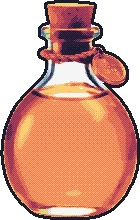 Gilded Tonic carries 10 charges that pay out 15 Gold per use before the bottle is spent.
 Draught of Insight holds 5 charges in the demo build, awarding 15 XP on each trigger until empty. Under the November 14, 2026 update, each sip of an XP potion awards no more than a single level, and each sip of a Gold potion pays no more than the Gold earned from defeating a rival.

Removed Break Chance and Rarity Grid Footprints
Potions never break from combat use. The Common relic  Corked Flask gives potions a 25% chance to activate without spending Ammo. With the Uncommon relic
 Steady Corks, each potion trigger rolls a 30% chance to keep its charge. Stronger potion tiers also claim larger grid footprints inside your backpack:
| Potion Rarity | Backpack Grid Size |
|---|---|
| Common & Uncommon | 1x2 |
| Rare | 1x3 |
| Epic | 2x2 |
| Legendary & Alchemist-only | 2x3 |

Three Ways to Upgrade, Infuse, and Brew Flasks
The following three options cover upgrading, infusing, and brewing flasks:
- Potions behave like standard equipment pieces: they can be leveled up, socketed with gems, and placed on forge anvils. Dropping two identical potions onto one another levels the flask up. You can also spin potions at the
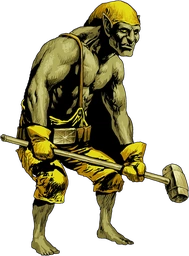 Gambler’s Forge, as covered in our Gambler’s Forge wheel breakdown.
- Fusing a potion with a piece of gear at the
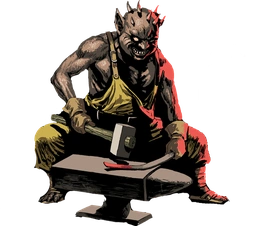 Fusion Forge preserves all of the item’s existing properties while adding the flask’s effect on an Ammo counter that recharges every fight; check our merge and forge guide for parent-slot rules. Gold and XP flasks cannot be infused into equipment.
- Melding a pair of flasks on the Fusion Forge anvil is restricted to the Alchemist. In Climb runs, her
 Master’s Still relic enables potion fusion at the forge and unlocks Alchemist-exclusive flasks. Her
 Alchemist’s Forge cauldron room only appears while you carry at least two real potions. In the demo build, cauldron brewing combines 2 to 6 flasks at a 1.5x effect multiplier with up to 12 charges. In the November 14, 2026 update, rebrewing an elixir adds its previous doses at half strength so values cannot scale endlessly. The November 18, 2026 update toned down Alchemist brewing further.

Sources
- Steam announcement: Dungeonbound v0.1.50: Potions, Runes & Late Game + 40k WISHLISTS!
- Steam announcement: Dungeonbound v0.1.51 + 55k wishlists!! + 7 days until we launch
- Steam announcement: 85,000 wishlists! Giveaway on discord! 5 keys to win
- Steam announcement: Update v1.0.12 + ROADMAP
- Dungeonbound demo build game files