Is Gold Infinite in Dungeonbound Incremental Mode?
How uncapped Gold farming works in Dungeonbound's Incremental mode, why shop buy-and-sell loops lose Gold, and which Gold-scaling items carry hard limits.

Short Answer
Incremental mode puts no ceiling on how much Gold a hero can accumulate across repeatable runs, yet the merchant formulas prevent infinite Gold loops from buying and reselling wares. Your stored Gold can keep climbing through endless floors in  The Void Realm, economy skill nodes, and Gold-generating gear, while shop price floors, resale caps, and item stat limits keep both trading loops and Gold-scaled combat power bounded. For how Campaign persistence and skill trees work overall, see our Dungeonbound Incremental Mode Guide.

Uncapped Farming in Campaign
Whenever a Campaign hero gains currency, the game adds the earned amount onto that hero’s stored Gold balance with no upper clamp. Falling in a Campaign battle only cuts short your floor climb, leaving that hero’s banked Gold, levels, and bought upgrades untouched. Campaign heroes can replay the five 8-floor Acts or enter The Void Realm, an endless dungeon with no final floor. Review each act’s layout and bosses in our Campaign Acts 1 to 5 breakdown.
Skill tree upgrades permanently raise Campaign income:
- On
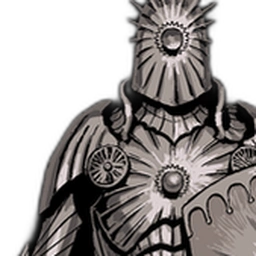 Joshua (Campaign)’s skill tree,
 Plunderer grants +10% Gold from kills for up to 3 ranks.
 The King (Campaign) carries the matching 3-rank
 Royal Tax node for +10% Gold from kills.
- Joshua (Campaign) can also invest up to 3 ranks in
 Tithe of Blood so every kill drops +1 Gold.
- Taking
 Scrap Dealer raises Gold earned from selling items by +25%.
Gold-generating gear adds further payouts during and after fights:
 Gilded Ring boosts kill Gold by +8% and yields 10 Gold every 5.5s.
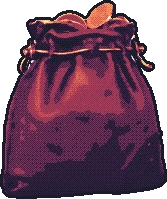 Hoarder’s Purse banks 10 extra Gold onto its own sell price at the start of every battle.
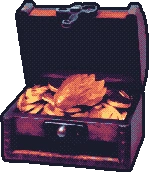 Dragonhoard Coffer grants an extra 5% of the Gold earned after every won battle.
 Midas Coin grants +10 Block and yields 10 Gold every 8s, but it is locked to Climb-only heroes
 Midas and
 Thief and cannot roll in Campaign. Gold-granting consumables face a per-use cap equal to the floor’s round income during Climb runs, while Campaign runs do not apply that Climb cap.
Why Shop Buy-and-Sell Loops Lose Gold
Standard non-tome items sell for a baseline of 35% of their market value. Even with resale bonuses stacked, the sell-price formula caps base resale payouts at 70% of market value, adding combat-banked Gold from pieces such as Hoarder’s Purse only after that ceiling is applied.
On the buying side, shop discounts clamp at 28% by preserving a 2% margin above the 70% sell ceiling, keeping shelf purchase prices at no less than 72% of market value. Because buying a ware at the  Shop costs at least 72% of market value while selling it back pays at most 70%, repeating purchases and sales loses Gold rather than generating infinite Gold. Read full pricing, reroll, and ban rules in our Dungeonbound Shop Guide.
Stat Ceilings on Gold-Scaling Gear
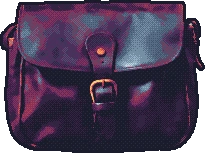
Even when a Campaign hero farms an enormous Gold reserve, equipment that converts held Gold into combat stats stops scaling at fixed limits.  Hoardmaster Scepter adds +15% Gold from kills and turns +2% of your Gold into bonus Dmg, capped at 5,000 Dmg.
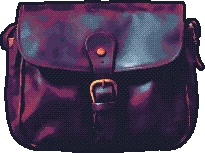
 Prospector’s Kit adds +12% Gold from kills and grants +1 Speed per 100 Gold held at Level 1, counting at most 5 increments of 100 Gold.
Tie these economy pieces into broader run planning with our Dungeonbound Complete Guide.
Sources
- Game files of Dungeonbound (release build)
- Steam store page